
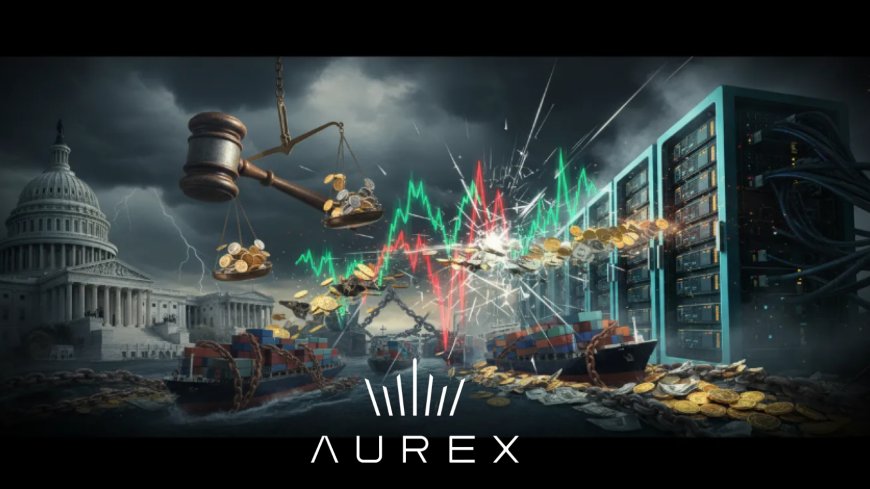
The Supreme Court issued a broad 6-3 decision: the president cannot use the International Emergency Economic Powers Act to impose sweeping import duties on major trading partners. The rationale is simple and constitutional - taxation and duties belong to Congress. The consequence is immediate and disruptive. Not only do future collections stop, the ruling opens the door to refunds for tariffs already paid.
Refunds are not theoretical small-ticket items. Estimates from the Penn Wharton Budget Model place potential refunds between $133 billion and $175 billion. Mechanically, refunds are processed through Customs with interest, but there are millions of entries to reconcile. Key practical questions remain unresolved.
Immediate reaction from the administration was to pivot. A 10 percent global tariff under Section 122 of the Trade Act of 1974 was announced, and other statutory options were floated including Section 301, Section 232, and even older measures from the Smoot Hawley era like Section 338. Each alternative carries different legal limits and political costs.
Reliability matters in trade. When a dominant partner becomes unpredictable, trading partners reroute supply chains and hedging strategies. Canada and the EU are signaling distance from U.S. trade policy by adjusting their own tariffs and market access decisions, for example easing restrictions on certain Chinese EVs. The practical outcome is capital and supply chain flows moving around the United States.
Recent GDP prints underperformed consensus, with a significant carve out for the government shutdown which mechanically reduced measured activity. At the same time core PCE inflation remains stubborn near 3 percent. That combination is the textbook for stagflationary pressure.
GDP growth today is concentrated in two pockets: high-income consumer spending and corporate capital expenditure on AI infrastructure. Machines buying machines shows up as GDP growth without corresponding hiring. Companies are deploying capital to automate and reduce future labor needs. The net effect: measured growth on the top line while employment metrics stagnate.
Anthopic demonstrated capabilities to identify security vulnerabilities and generate patches at scale. For incumbent cybersecurity and enterprise software vendors, that is existential. Products built on proprietary detection and remediation suddenly face commoditization, the LLM models can do the work cheaper and faster.
Examples of impacted names include CrowdStrike, Palo Alto Networks, and JFrog which sold off on the realization that the product moat is under threat.
These LLM models’ availability accelerates adoption and raises questions about long-term pricing power for software vendors.
NVIDIA currently underpins the AI investment narrative. Hyperscalers and enterprises are pouring capital into GPUs, but that buildout may suffer the same fate as the late 1990s fiber boom - infrastructure that benefits society but bankrupts the builders if monetization lags. Market expectations for companies like OpenAI and the hyperscalers assume near-miraculous revenue growth. If NVIDIA reports softer demand or signals stabilization, the market repricing will be swift and broad.
Private credit attracted yield-seeking capital by offering steady returns. It works until liquidity is demanded en masse. Blue Owl gating withdrawals exposed the structural mismatch: daily liquidity for investors versus illiquid loan assets. One gated fund is a signal. The "cockroach theory" applies - expect more stress points.
Actionable checklist for corporate leaders
Actionable checklist for investors
The week rearranged several macro and market assumptions simultaneously. A major legal ruling removed a policy tool, threatened a large fiscal transfer, and increased global trade uncertainty. Domestic growth looks fragile, inflation remains sticky, and capital spending on AI is masking a labor market that is not improving. On top of this, AI is now a threat to incumbents, not just a growth engine. NVIDIA is the immediate test for whether markets maintain the AI miracle narrative or begin a painful repricing. Plan for multiple outcomes, prioritize liquidity, and force-test assumptions that previously relied on stability in trade policy and software pricing power.
Supreme Court decision and analysis: https://www.scotusblog.com
Penn Wharton Budget Model estimates: https://budgetmodel.wharton.upenn.edu
BEA GDP and Core PCE releases: https://www.bea.gov
Coverage on Anthopic and open source AI developments: https://techcrunch.com and https://github.com (project repositories)
Blue Owl withdrawal gating reporting: https://www.reuters.com and https://www.bloomberg.com
CrowdStrike and cybersecurity market moves: https://www.cnbc.com and market data terminals